Table of Content
To design and plan what kind of box I needed I used Google Sketchup to design it after working out what volume and port size/length I needed in WinISD. This gives the woofer a usable extension down to around 32Hz while keeping the box a nice 35cm/13.7" cube enclosure. If you followed your blueprints correctly the drivers should fit snugly into the holes you cut on the front of the cabinet.
It improves the bass by a great deal, which is necessary because your movie-watching experience would be incomplete without it. I'm a car audio fanatic and professional electrical engineer. During college I was a professional installer and even had a side business doing it. I still love speakers, home & car audio, and all kinds of projects related to enjoying the sound we love. All amplifiers of any type – where it’s a car stereo amplifier, home stereo receiver, home theater amplifier, and so on, have a minimum Ohms rating.
The Benefits Of DIY Subwoofer Projects
Speakers produce sound by converting electrical energy into sound energy using magnets to "push" air using the cone of the speaker to push the air in and out at a certain frequency. While entire books have been devoted to this phenomenon, you only need a rudimentary knowledge of sound design to make your own simple speakers. Whether you want to spend weeks developing the next great sound system or just want to understand speakers a little better, read on to learn how to make your own speakers. Charge the batteries or attach the power cable, and ensure your DIY speakers work.

Premium Bluetooth speakers offer audiophile-grade sound and Wi-Fi network connectivity, but you can make a DIY portable speaker at home. With a homemade wireless speaker, music fans can enjoy impressive sound quality for a reasonable price. So, stick around to learn how to make Bluetooth speakers at home. With the help of this tutorial, you can easily make your own DIY subwoofer. The project requires little experience and costs less money than if you were to buy one from a store.
STEP 4 Connect the Amplifier Module to the Bluetooth transmitter
Especially, if the LR crossover is + to – as I do not know how to add an L pad to this (I do understand how to add the L pad if the LR crossover is + to + as that is obvious). As they have electrical properties that include inductance and capacitance, their “total resistance” can actually change with the music slightly. Because of this, there’s some extra math needed to figure out the total resistance. Never spend the money on an expensive, high-end speaker kit if you are uncomfortable putting it together.
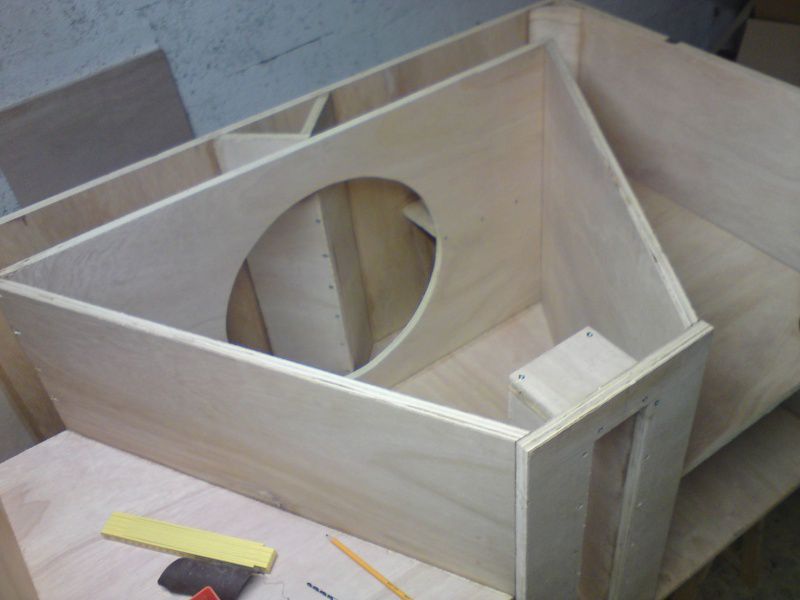
This subwoofer will be a great addition to your home theatre system, as you can witness when it was tested with a movie soundtrack. This DIY project should not take more than half an hour to complete, so it’s worth trying out if you are interested in building your subwoofer. Learning how to build a speaker box allows you to customize the fit and design of the box to match your desired audio quality.
DIY Subwoofer
This makes construction more difficult, but it looks a lot nicer. Overall this was a very cheap built with the driver only costing £10 and a used £30 amp. This is where it gets a bit interesting as using 110mm guttering is the best I could do for my port to get it big enough and long enough. If I had more materials in a perfect world I could have designed the box to hit a bit lower than 32Hz but hey. WikiHow is a “wiki,” similar to Wikipedia, which means that many of our articles are co-written by multiple authors. To create this article, 30 people, some anonymous, worked to edit and improve it over time.
You want a box-type shape, and you should cut out holes for speakers and analog audio inputs. If you’re a music fan and want to enjoy listening to it more often, this DIY project is for you. The project will show you how to assemble speakers and create your sound system in your room. The multiple sound system project is a DIY that can be used in your room. It involves building an entire sound system from scratch, and the parts are pretty much limitless.
Person Made This Project!
This article details how to build a sealed speaker box, which separates the front and rear sound waves to improve the bass. The assumption many people make is that a single subwoofer can be placed anywhere in the room because low bass is omnidirectional. So there is no need for expensive large woofers in your main speakers. Since subwoofers are usually self powered you don't need as powerful an amplifier for your main speakers either. If you are fond of working on DIY projects, this project will help you enhance your skills.

Without access to a lab filled with different crossover components, your ability to tweak will be limited to what you have available. You can make some simple changes without testing equipment by simply making the change and then seeing if it sounds better. It can be constructed using standard tools and takes only 2-3 days. The frequency response ranges up to 25Hz, and working with a sealed enclosure helps us achieve an extended bass response while maintaining high efficiency.
On a speaker, this refers to a set of positive (+) and negative (-) inputs. On a single voice coil, you will only have one positive and one negative, so you only have one channel. On a dual voice coil speaker, you have two positives and two negatives, so without bridging, you have two channels. Fill the rest of your speaker with "acoustic stuffing." This specially designed fabric is meant to dampen sound inside the speaker so that you don't hear weird vibrations or echos. Use wood glue or adhesive to securely fasten the crossover to the cabinet. Wire your batteries and install a battery charge protection module to prevent overcharging or electrical hazards.
Although spheres have advantages, it is very difficult to create a spherical speaker box that is as strong as a typical rectangular box. One good example of a spherical speaker is the Gallo Nucleus Solo above on the left which is made of rolled steel or brass. An even better design is the sphere/tube concept by B&W shown on the right. This design gets the benefits of a spherical design, but also adds a tapered tube at the back to eliminate all internal resonances. You really start to save money when building a 3-way speaker system. Any good system with a woofer will cost at least $400 due to the amount of wood and bracing required, shipping costs...
The manufacturer specifications for drivers can only help so much in determining speaker box volume and crossover design for your system. For professionals, these values are a starting point in designing a speaker. Every system is different and even small changes in box shape have have a dramatic impact on the system as a whole. Testing allows you to tweak the design to achieve a better, flatter response curve.


No comments:
Post a Comment